IT-
IT- ES-
ES- FR-
FR-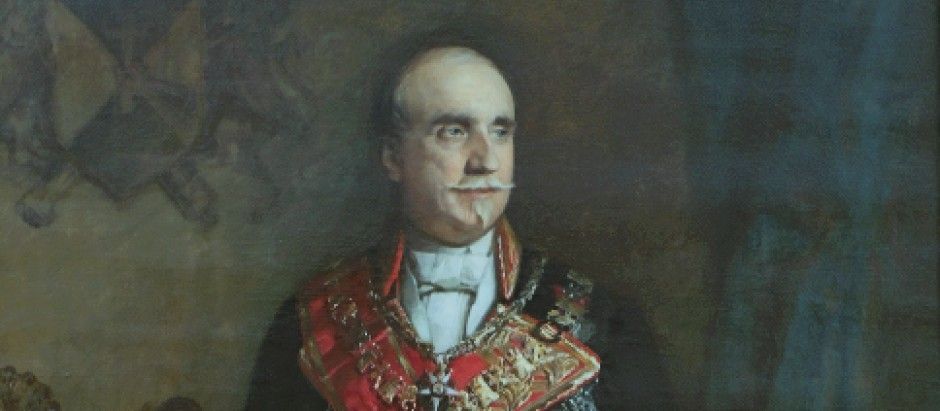
A surprising discovery in Ceuta has shaken the art world: the lost portrait of Leopoldo O’Donnell, who was a Spanish politician and military figure of the 19th century. He was born on 12 January 1809 and died on 5 November 1867. O’Donnell played a crucial role during the period known as the Bienio Progresista in Spain, where he served as the Prime Minister. Besides his political achievements, he also distinguished himself in the military field, participating in events such as the Revolution of 1854.
His figure is linked to key moments in 19th-century Spanish history, and his portrait, painted by Raimundo de Madrazo y Garreta in 1867, is noteworthy. Raimundo de Madrazo was a prominent Spanish painter born on 14 July 1841 in Rome and died on 15 September 1920 in Versailles. He belonged to a renowned family of artists, being the son of Federico de Madrazo and brother of Ricardo and Luis de Madrazo, all of whom were prominent painters.
Raimundo Madrazo specialised in portraits and genre scenes, noted for his ability to capture elegance and sophistication in his works. His style embraced the influence of realism and impressionism, and his technical skill earned him recognition in the art scene of his time.
Among his most notable works is the portrait of Leopoldo O’Donnell, Prime Minister of Spain.
This painting, owned by the Museo del Prado, was missing for a century, submerged in an odyssey partly caused by an error in its attribution.
Erroneous Attribution of the Painting: The Unknown Journey of the Portrait
The history of this valuable portrait dates back to 1911, when the Spanish State acquired the work, which had previously been in the possession of the Marquess of La Vega de Armijo, who became one of the prominent political figures of the 19th century, holding notable public offices for over fifty years.
However, an error in attribution to the artist’s father, Federico de Madrazo, instead of Raimundo de Madrazo, caused the work to fall into obscurity. It was inherited by the Marquess of La Vega’s niece, María Vinyals y Ferrés, in 1908.
The portrait of Leopoldo O’Donnell, painted by Raimundo de Madrazo, has been the witness of an intriguing misunderstanding that has persisted over time.
The confusion over the authorship of this masterpiece is intertwined with the artistic influence of Federico de Madrazo, Raimundo’s father. Federico’s style, especially in the composition and treatment of details such as fabrics or decorations, left its mark on this portrait. The active collaboration between father and son was common, and Federico’s involvement in retouching parts of the painting is not surprising, given the importance of the commission.
In terms of technique, Raimundo’s work exhibits a somewhat looser brushwork that reveals the path of the brushstrokes in certain areas, adopting an atmosphere of balance and serenity reminiscent of his father’s exquisite portraits. Family documentation indicates that such collaborations were frequent and occurred in both directions.
The plot thickened through exhibitions and acquisitions, and the confusion continued when the portrait was transferred to the Academy of Fine Arts of San Fernando. In the Royal Decree of acquisition in 1911, Federico de Madrazo was incorrectly indicated as the original author, instead of his son Raimundo de Madrazo.
This artistic enigma reminds us of the complexity and surprises that lie behind each work. The history of the O’Donnell portrait is a journey of discoveries, where Raimundo’s creativity intertwines with his father’s influence, creating a work that defies labels and continues to fascinate art lovers.
A Lost Trail in Morocco
The painting was sent to the Spanish High Commission in Morocco, specifically to Tetouan, where it unfortunately lost its trail. For decades, the work remained in the shadows of art history, until a historian, Emiliano Cano, found a photograph at the Spanish Cultural Heritage Institute that suggested the presence of O’Donnell’s portrait.
The Puzzle is Solved in Ceuta
Regarding the complex issue of the portrait’s attribution, historian Amaya Alzaga addressed the matter in her 2012 thesis, examining news published in the 1867 press. In her research, Alzaga highlighted the true authorship of the work and noted its deposit in Tetuán. Despite these findings, the precise location of the work has been a mystery since 1957, according to information collected in the book “19th Century Painting in the Prado Museum”.
This discovery not only solves the enigma of the lost portrait but also sheds light on the so-called ‘Dispersed Prado’, now renamed ‘Extended Prado’. The location in Ceuta, previously unknown, closes an important chapter in the history of Spanish art.