


 IT-
IT- ES-
ES- FR-
FR-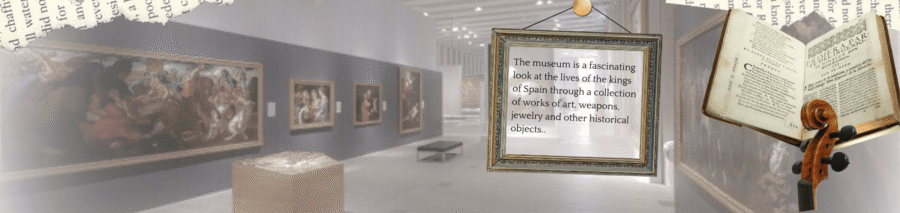
Are you just passing through and want to explore Madrid in one day, but don’t know where to start? Madrid is a vibrant city, full of history, art, and gastronomy, offering plenty of opportunities for a perfect day out. If you only have one day to explore the capital, the local guides at Tour Time suggest an ideal itinerary. Make the most of its most iconic corners without missing out on the essentials—this is just a sample of what we can do for you.
What can you visit in the morning in Madrid?
We suggest the following itinerary. But before you set off, we recommend recharging your batteries at one of Madrid’s most iconic spots, Café de Oriente. Not only will you enjoy views of Plaza de Oriente and the Royal Palace, but your coffee will surely taste better for being in one of the capital’s most beautiful restaurants.
By the way, if you’re coming to the city center by car, there are several parking lots, but there’s a parking exit just outside Café de Oriente and in front of the Teatro Real. This option will be the most convenient.
10:00 – Royal Palace and Almudena Cathedral.
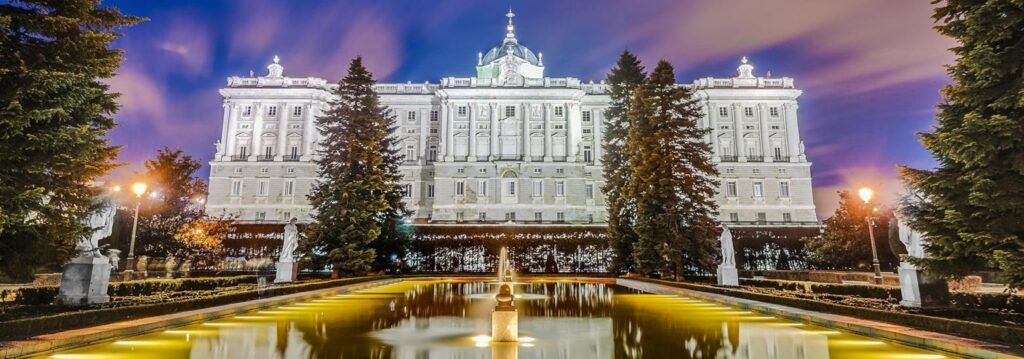
The day begins in one of Madrid’s most majestic buildings: the Royal Palace. With more than 3,400 rooms, it is one of the largest palaces in Europe, even surpassing Versailles. Although it is no longer the monarchy’s habitual residence, it is still used for official events and state ceremonies.
As you tour its impressive halls, you’ll come across the Throne Room, adorned with frescoes by Tiepolo; the Gasparini Room, with one of the most luxurious decorations in the palace; and the Royal Armory, where armor and weapons used by the kings of Spain throughout history are displayed.
I’m going to tell you a story to make you want to learn a little more about the Royal Palace: the Palace’s mysterious Stradivarius.
One of the most valuable treasures housed in the Royal Palace is a unique collection of Stradivarius instruments. Antonio Stradivari, the legendary Italian luthier, crafted four instruments for the Spanish court in the 18th century. Curiously, the viola in the collection disappeared under mysterious circumstances in 1772 and was never recovered. To this day, it remains one of the great enigmas of the Royal Palace. What happened to the viola? Is it hidden in some secret corner of the Palace? Only time will tell, but it remains a fascinating story that adds an air of mystery to the already imposing Royal Palace.
After the visit, we crossed the Plaza de la Armería to reach the impressive Almudena Cathedral. Although its construction began in 1883, it wasn’t completed until 1993, making it one of the most modern cathedrals in Europe. Its blend of neo-Gothic, neoclassical, and neo-Romanesque styles makes it unique. We regret but understand that group tours of the cathedral are no longer possible, but you are welcome to visit individually.
To enjoy one of the best views of Madrid, climb the cathedral’s dome. From there, you can admire the Royal Palace, the Sabatini Gardens, and even the Casa de Campo.
With this first stop, you’ll have discovered one of Madrid’s most iconic areas, brimming with history, impressive architecture, and unforgettable views.
If you’re interested in visiting the Royal Palace with a local guide to learn about the country’s history and palace curiosities, don’t hesitate to contact Tour Time.
12:00 – Plaza Mayor and San Miguel Market.
Just a few minutes’ walk from the Royal Palace, you’ll find one of Madrid’s most iconic and visited squares, the Plaza Mayor. This spacious and majestic plaza, surrounded by three-story buildings with red brick facades, is the heart of old Madrid. It was inaugurated in 1620 during the reign of Philip III and, over the centuries, has witnessed significant historical events such as bullfights, public executions, and theatrical performances. The equestrian monument of Philip III, located in the center, recalls the era when Madrid was the center of imperial power.
Walking through its arcades, you can feel the city’s vibrant atmosphere. The cafés and restaurants lining the square offer the opportunity to enjoy a drink outdoors while observing Madrid’s never-ending life. Plaza Mayor is also an excellent place to sit and enjoy a moment of relaxation, admiring the Baroque architecture that surrounds this unique place.
Right next door is the San Miguel Market, a paradise for food lovers. Opened in 1916, this market is one of the oldest and most iconic in the city, although in its early years it was dedicated exclusively to selling fresh produce. Today, it has been transformed into a gourmet market, where you can sample a wide variety of tapas, local dishes, and high-quality products for all tastes.
Here you can find everything from acorn-fed Iberian ham and artisan cheeses to exquisite seafood and a selection of Spanish wines and cavas. The small stalls within the market allow you to enjoy unique tapas in a vibrant and flavorful atmosphere. If you’re a foodie, this is an ideal place to try the typical delicacies of Madrid and all of Spain, all in one place. Furthermore, the Mercado de San Miguel has become one of the most photographed spots in Madrid, thanks to its iron and glass architecture, which gives it a modern yet traditional touch.
A visit to Plaza Mayor and Mercado de San Miguel will not only allow you to enjoy the history and local atmosphere, but also immerse you in Madrid’s culinary culture in a unique way. Every corner, every bite, will bring you closer to the soul of Madrid.
Make a stop at midday.
As we continue our tour, we arrive at Puerta del Sol, one of Madrid’s most recognizable landmarks. This square has been the city’s nerve center for centuries and, as its name suggests, has witnessed countless historical events. Here, you’ll find some of the capital’s most iconic symbols, such as the Bear and the Strawberry Tree, part of the city’s coat of arms, and the iconic sign for Tío Pepe, the famous Jerez brandy that has graced the square for decades.
But what truly makes Puerta del Sol a special place is Kilometer Zero, a stone plaque embedded in the ground that marks the starting point of all radial roads in Spain. This is the heart of the national highways, and from here the distance to other parts of the country is measured.
Kilometer Zero has not only geographical significance but also symbolic significance. It represents the starting point for all travelers arriving in Madrid and from which they can measure the distance to any other corner of the country. Furthermore, according to popular tradition, many Madrid residents and visitors approach this point to take a photo or simply to experience the historical significance of this place.
This place holds significant significance in the cultural and social context of Spain. Every December 31st, at midnight, thousands of people gather at Puerta del Sol to celebrate New Year’s Eve. The famous Casa de Correos clock, which chimes in the New Year, is located right on the building opposite Kilometer Zero. Each chime marks the beginning of a new year and the tradition of eating 12 grapes at each chime, a deeply rooted custom throughout Spain.
Puerta del Sol and Kilometer Zero are much more than just a geographical landmark. They are symbols of Madrid’s cultural and social melting pot, a place steeped in history and traditions that define the city’s unique character.
For an authentic gastronomic experience in Madrid, you can opt for a delicious cocido madrileño, a traditional dish from the capital, or try a calamari sandwich, one of the most popular specialties in the city center’s bars.
Afternoon: Art and nature in the heart of Madrid
2:30 PM – Paseo del Prado and the art triangle.
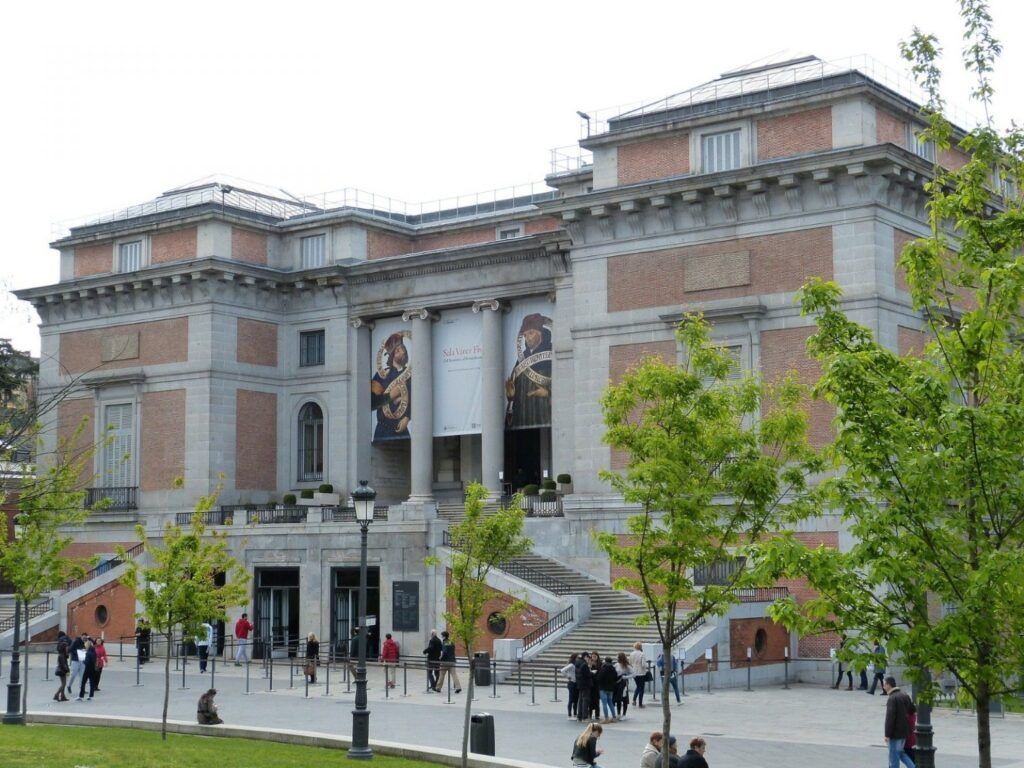
After enjoying a hearty lunch, we headed to one of Madrid’s most iconic areas: Paseo del Prado, a cultural enclave declared a UNESCO World Heritage Site. This iconic boulevard, lined with leafy trees and majestic buildings, is the heart of the so-called “Landscape of Light,” a tribute to its rich history and art.
Here you will find three of the world’s most important museums, each with its own character and unique collection:
Prado Museum: Ideal for lovers of classical art, this museum houses masterpieces by artists such as Velázquez, Goya, Rubens, El Greco, and Titian. Don’t miss “Las Meninas” or “The Executions of May 3rd.”
Reina Sofía Museum: If you prefer contemporary art, this museum is a must-see. Its most famous gem is Picasso’s “Guernica,” a striking work that portrays the horrors of war. You’ll also find pieces by artists such as Dalí and Miró.
Thyssen-Bornemisza Museum: A midpoint between the two previous museums, its collection ranges from the Renaissance to modern art, with works by Caravaggio, Van Gogh, Hopper, and Kandinsky. It’s ideal if you want a more comprehensive perspective on art history.
In addition to the museums, the Paseo del Prado offers a pleasant stroll among emblematic fountains such as the Neptune Fountain and the Cibeles Fountain, two of the city’s most iconic symbols.
Whether you choose to visit a museum or simply enjoy the surroundings, this area will immerse you in Madrid’s cultural and historical richness.
4:30 PM – Retiro Park, Madrid’s green lung.
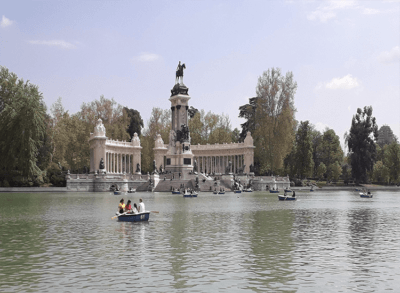
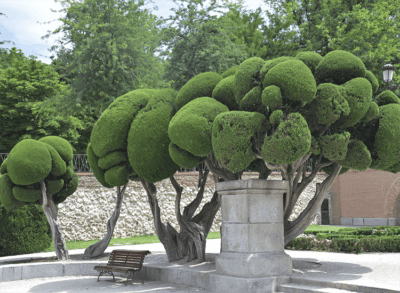
After so much culture, there’s nothing better than a break in Retiro Park, the city’s green lung and one of Madrid’s most iconic spaces. You can stroll through its historic gardens, enjoy the shade of its centuries-old trees, or paddle in the famous Estanque Grande, where rental boats offer a unique view of the park.
Among its most interesting spots are the Crystal Palace (please note that it will be under construction for a while), the Monument to Alfonso XII, with its impressive viewing platform offering one of the best views of the park. You can also visit the Rose Garden, a beautiful garden with more than 4,000 rosebushes of different varieties, especially spectacular in spring.
If you’re looking for a moment of calm, visit the Bosque del Recuerdo, a moving space dedicated to the victims of the 11M attacks, or discover the Fisherman’s Cottage, a picturesque building that looks like something out of a fairy tale.
Retiro Park is a perfect place to unwind, breathe fresh air, and enjoy some tranquility in the heart of the city.
What can you do at night in Madrid?
At dusk, walking along Gran Vía, Madrid’s most iconic artery, is a true spectacle of light and life. This iconic avenue, built at the beginning of the 20th century, is known for its wide range of shops, theaters, cinemas, and restaurants, as well as its impressive architecture, which combines styles such as Art Deco, Neo-Baroque, and Modernism.
Strolling along Gran Vía, it’s impossible not to marvel at some of its most iconic buildings, such as the Metropolis Building, with its golden dome that shines especially brightly at night; the Telefónica Building, once the tallest skyscraper in Europe; and the Capitol Building, famous for its illuminated Schweppes sign that has become a symbol of the city.
At the end of Gran Vía, we reach the renovated Plaza de España, a wide pedestrian area surrounded by nature, fountains, and rest areas. From here, you can admire some of the capital’s tallest buildings, such as the Torre de Madrid and the Edificio España, both illuminated at dusk, creating a stunning cityscape.
If you enjoy night photography, this is the perfect time to capture the magic of Madrid’s illuminated skyline. In addition to Gran Vía, the buildings most notable for their spectacular nighttime illuminations in Madrid are:
- Cibeles Palace, home to Madrid City Hall, with its elegant illuminated façade.
- Puerta de Alcalá, which glows with warm light at nightfall.
- Edificio de Correos in Plaza de Cibeles, a true architectural symbol of the city.
- Royal Theatre, whose illumination highlights its imposing presence overlooking Plaza de Oriente.
- Royal Palace, majestic and even more impressive when its façade is illuminated with golden lights.
Dinner and flamenco show.
To close the day on a high note, there’s nothing better than a dinner with a flamenco show in a tablao, where you’ll enjoy the passion and art of flamenco accompanied by excellent Spanish cuisine. Tour Time also suggests C&C, a perfect place to experience this unique experience.
You no longer have to wonder what to do in Madrid for a day. At Tour Time, we’ll guide and accompany you on a trip full of unique experiences you won’t want to miss. If you need to organize a walking tour of historic Madrid or any other part of Madrid, contact us; we’d love to hear from you.
